
No matter where you go online, you run into marketing messages. YouTube ads. Sponsored posts. Pop-ups. Autoplay videos. Banners squeezed between paragraphs.
And because there is so much of it, people don’t read content the way they used to. They scan. They scroll. They decide fast. If your content feels generic, they leave. That’s the environment you are publishing in today.
So if you want your content to work, you need to be clear, focused, and honest about what you are trying to say.

Why most online content misses the mark
Anyone can publish a blog post. That doesn’t mean anyone creates content worth reading.
A lot of articles repeat the same ideas, just phrased slightly differently. Others are written to hit a word count, not to help a reader. And with AI tools becoming easier to use, this problem has only grown.
People notice. Search engines do too.
In 2024 and 2025, search quality updates increasingly rewarded content that shows experience, intent, and clarity instead of volume or clever formatting.
Or, as content strategist Anatolii Oslovskyi from Rankability puts it,
“The goal isn’t to publish more. The goal is to say something worth reading.”
That sentence sums up the problem perfectly.
What “real content” actually means
Real content is not about being creative for the sake of it. It’s about being useful.
You are answering a question. Solving a problem. Explaining something that feels confusing.
To do that well, four things matter.
Simplicity comes first
People decide fast
Research consistently shows that users decide within seconds whether they trust a page. If they don’t immediately understand what they are reading, they leave.
Simple writing helps you avoid that. This doesn’t mean “short.” It means clear. One idea at a time. No unnecessary detours. If a sentence doesn’t help the reader understand something faster, cut it.
Simple content builds trust
Clear language signals confidence. Complicated language often signals uncertainty. If you know what you are talking about, you don’t need to dress it up.
Specificity beats vague promises
Generic claims don’t convince anyone
“The best.”
“Industry-leading.”
“Cutting-edge.”
Readers have seen it all before. What they want instead are specifics. Examples. Numbers. Context. Explain what happened. Explain why it worked. Explain where it failed.
That level of detail shows experience, not just opinion.
Show your work
In recent search quality guidelines, Google has been clear about one thing. Content that demonstrates first-hand experience performs better.
That means going beyond theory. It means explaining real situations, not just ideal ones.
Focus on one message
More ideas don’t make content stronger
Trying to cover everything in one article usually weakens it.
When you publish a page, ask yourself one question.
What do you want the reader to remember?
If the answer isn’t clear, neither is your content.
Focus improves retention
People remember focused messages better than scattered ones. That applies to blog posts, landing pages, and guides alike.
Pick one direction. Build around it. Leave the rest out.
Subtlety matters more than persuasion
People are tired of being sold to
Most readers can spot sales language instantly. When they do, they tune out. Real content doesn’t push. It explains.
It helps readers understand a situation so they can make their own decision. That approach builds trust, and trust is what keeps people coming back.
Let the content do the work
If your writing is clear and useful, you don’t need to force action. The value is obvious.
And that is exactly why subtle content performs better over time.
How this ties into SEO
Search engines follow user behavior
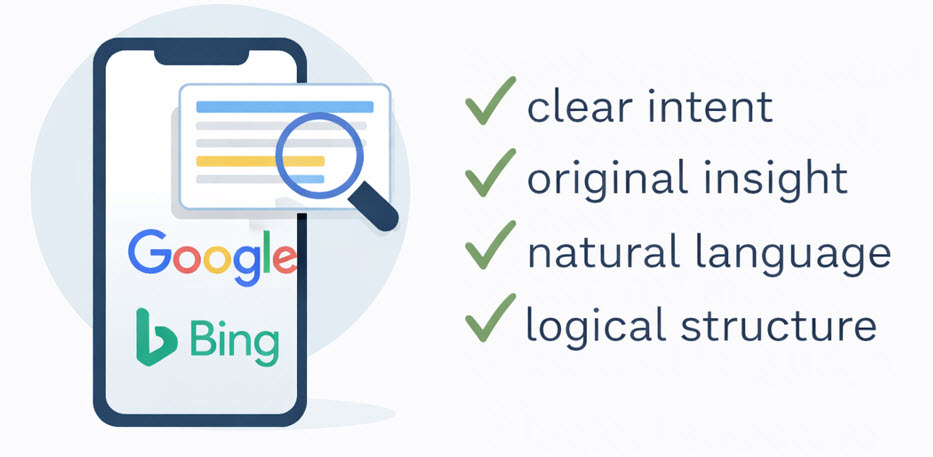
Search engines reward content that people actually read. In recent years, updates across Google and Bing have focused more on:
· clear intent
· original insight
· natural language
· logical structure
These are not SEO tricks. They are writing fundamentals.
AI detection is a side effect, not the goal
Content that sounds human usually passes AI detection tools more easily. Not because it was written to beat them, but because it was written with intent.
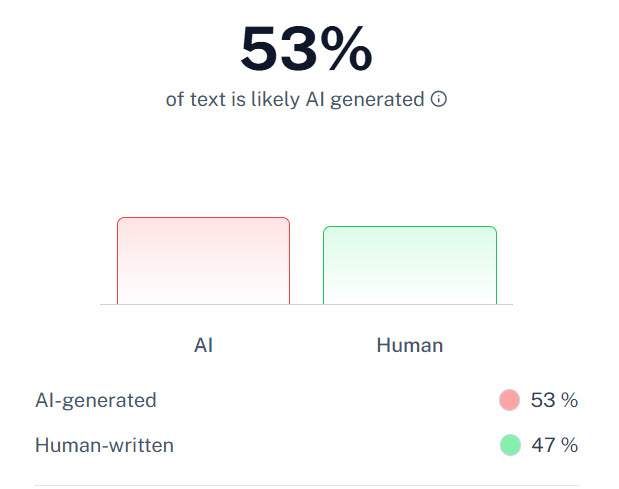
Varied sentence length. Clear opinions. Real examples. That’s what both readers and algorithms respond to.
What this means for your content
If you are responsible for publishing content, the takeaway is simple. Don’t write to fill space. Write to explain something clearly.
Say less, but say it better.
Focus on one message.
Be specific.
Avoid inflated language.
Real content doesn’t try to impress. It tries to help. And in a digital space full of noise, that still makes a difference.
